
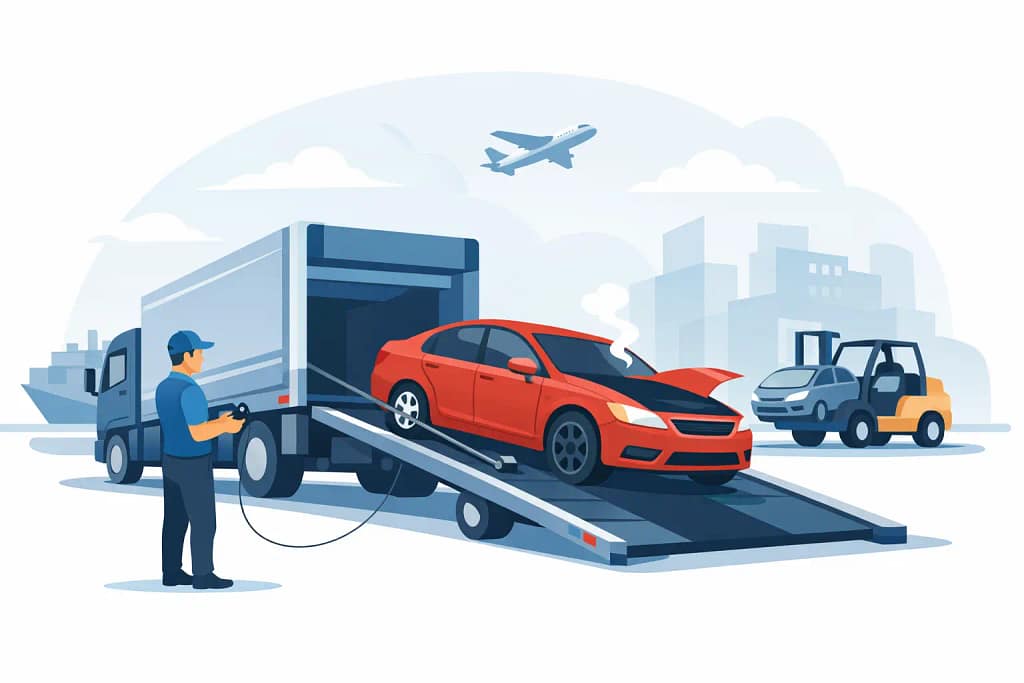
A car does not have to start, steer perfectly, or drive onto a trailer to be transported. If you are asking, can you ship a non running car, the short answer is yes. The part that matters is how non-running the vehicle is, because that affects the type of truck, the loading process, the timing, and the price.
For most customers, the stress comes from not knowing whether a dead battery counts, whether a car with flat tires can still move, or whether a carrier will show up and refuse the job. That is where clear communication matters. Non-operable vehicles can absolutely be shipped, but the transporter needs accurate details upfront so the right equipment arrives on pickup day.
Can you ship a non running car safely?
Yes, as long as the carrier knows the vehicle’s condition before dispatch. A non-running car usually needs a winch, forklift assistance, or another loading method that goes beyond standard drive-on transport. That extra handling is routine for experienced carriers, but it is not something every truck can manage.
This is why the definition of “non running” matters. Some vehicles are mechanically dead but still roll, steer, and brake. Others do not move at all because the wheels are locked, the suspension is damaged, or key components are missing. Both can be shipped, but they are not priced or scheduled the same way.
A good transport company will ask specific questions instead of giving a vague quote. Can the car roll? Can it steer? Do the brakes work? Are all four tires inflated? Is the vehicle sitting unusually low? Those answers help avoid surprise fees, failed pickups, or last-minute equipment changes.
What counts as a non-running car?
In auto transport, “non running” is a broad category. It can describe a car that will not start because of a dead battery, but it can also mean a salvage vehicle with collision damage. From a shipping standpoint, the real issue is not whether the engine runs. It is whether the vehicle can be loaded and unloaded without major complications.
A car is often considered inoperable if it cannot be driven under its own power. But there are levels to that. A vehicle with a starter problem is much easier to move than one with seized brakes and missing wheels. If the car rolls freely and can be steered, the process is usually straightforward with the proper trailer. If it does not roll, transport becomes more specialized.
That is why customers should be precise when requesting a quote. Saying “it does not run” is a start, but it is not enough. The more accurate the condition report, the more accurate the schedule and price will be.
How non-running car transport works
The process starts with matching the vehicle to the right equipment. Many inoperable cars are loaded with a winch onto an open or enclosed carrier. The winch pulls the vehicle onto the trailer slowly and safely without the car needing engine power. If the car can roll and steer, that is usually all that is required.
When a vehicle cannot roll, has locked wheels, or has major structural damage, the carrier may need special tools or a different loading setup. In some cases, a forklift or rollback truck helps position the vehicle for transport. This adds coordination, and that usually adds cost as well.
The route also matters. A standard operable sedan on a common route is easier to assign than a non-running car in a rural location. If the pickup or delivery site has tight access, the carrier may need an alternate meeting spot with enough room for safe loading.
For customers, the biggest takeaway is simple: shipping a non-running car is not unusual, but it does require planning. When the transporter knows exactly what they are picking up, the job goes much more smoothly.
What affects the cost to ship a non-running car?
The main reason non-running transport costs more is the extra labor and equipment. A standard car that can drive onto a trailer is quick to load. A non-operable vehicle takes more time, more care, and sometimes a truck with a winch or special setup.
Condition is the first pricing factor. A car that rolls and steers will generally cost less than one that is fully immobile. The transport type matters too. Open transport is usually the more affordable option, while enclosed shipping costs more but may make sense for a classic, exotic, or high-value car that also happens to be inoperable.
Distance, route demand, vehicle size, and timing all play a role. Larger SUVs and trucks weigh more and take up more trailer space. Expedited scheduling can increase the price. Less common routes may also cost more because there are fewer available carriers running them.
What customers usually want to avoid is the low quote that changes later. Non-running vehicles are where hidden fees tend to show up if the original quote was based on incomplete information. Honest pricing starts with honest vehicle details.
Can you ship a non running car on open or enclosed transport?
Yes, both are possible. Open transport is the most common choice because it is widely available and cost-effective. For many everyday vehicles, that is the practical option even when the car is inoperable.
Enclosed transport is often chosen for collector cars, antiques, luxury vehicles, and exotics that need more protection from weather and road debris. If the vehicle is both valuable and non-running, enclosed shipping can be the better fit, but availability may be tighter and pricing will be higher.
It comes down to priorities. If the goal is budget-friendly shipping for a standard vehicle, open transport is usually enough. If the car has high financial or sentimental value, the added protection of enclosed transport may be worth it.
How to prepare a non-running car for transport
Preparation is less about making the car drivable and more about making it safe to load. The vehicle should be accessible, and the transporter should know about any issue that could affect handling. If the battery is disconnected, the car sits extremely low, or the tires lose air quickly, that should be shared in advance.
You should also remove personal belongings and secure or note any loose parts. If the car has damage, take clear photos before pickup. That helps document its condition and avoids confusion later.
If possible, make sure the tires are inflated and that there is a working path to the vehicle. A car blocked in by other vehicles, sitting on soft ground, or parked where a truck cannot safely reach it can delay pickup. Even with non-running vehicles, simple access makes a big difference.
When shipping gets more complicated
Some non-running vehicles need more than standard inoperable transport. Salvage cars, vehicles without keys, cars with broken axles, and units that have been in serious accidents may require custom handling. The same goes for heavily modified vehicles with low clearance or oversized dimensions.
This does not mean the vehicle cannot be shipped. It means the quote and dispatch process need more attention. An experienced transport team will flag those issues early, explain what is needed, and set realistic expectations for timing.
That is especially important for buyers who just purchased a car online or owners trying to move a vehicle after a breakdown. In both cases, speed matters, but accuracy matters more. A rushed booking with incomplete details can waste more time than it saves.
Choosing the right company for a non-running car
Non-operable transport is where service quality really shows. You want a company that asks the right questions, explains the process clearly, and works with fully licensed and insured carriers that handle this type of load regularly. Real support matters because inoperable shipments leave less room for guesswork.
If a company gives you a fast price without asking about rolling condition, steering, brakes, tire status, or damage, that is a red flag. A reliable quote should reflect the actual work involved. At Pro Auto Carriers, the goal is simple: zero surprises, clear communication, and the right setup from the start.
A non-running car is not a problem when the transport is planned correctly. It is just a different kind of shipment, and the difference is in the details.
If your vehicle will not start, do not assume it cannot be moved. With the right carrier, the right equipment, and honest information upfront, you can ship it safely and without the usual runaround.