
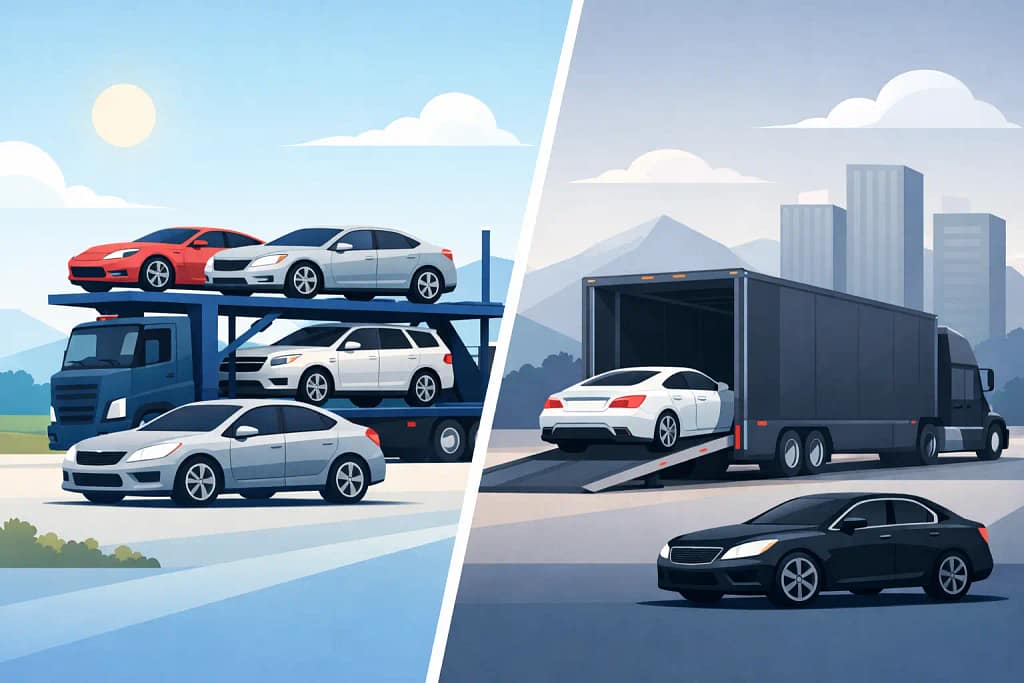
A lot of customers start with the same question after they request a quote: what is the real difference in open vs enclosed transport, and is enclosed actually worth the extra cost? The short answer is that both are safe, widely used ways to ship a vehicle. The right choice depends on what you are moving, how much exposure you are comfortable with, and how closely cost factors into the decision.
If you are shipping a daily driver from one state to another, open transport is usually the practical fit. If you are moving a rare classic, exotic, or high-value vehicle, enclosed transport often makes more sense. The gap between those two choices is where most people need clear guidance.
Open vs enclosed transport: the basic difference
Open transport means your vehicle rides on an open-air carrier, similar to the trailers you see delivering new cars to dealerships. It is the most common option in the auto shipping industry because it is efficient, widely available, and generally the most affordable.
Enclosed transport places the vehicle inside a covered trailer. That added enclosure protects it from weather, road debris, and outside exposure during transit. It is typically used for luxury cars, antique vehicles, collector cars, motorcycles, and specialty vehicles that need a higher level of protection.
Both methods are handled by licensed, insured carriers. The difference is not whether one is legitimate and the other is not. The difference is the level of exposure and the price you pay for reducing that exposure.
Why open transport is the most common choice
For most vehicle owners, open transport checks the right boxes. It is more available on most routes, easier to schedule, and less expensive than enclosed shipping. Because open carriers can move more vehicles at one time, the cost per vehicle is lower.
That makes open transport a strong option for standard sedans, SUVs, pickup trucks, and family vehicles. It also works well for relocations, college moves, military transfers, snowbird shipping, and online car purchases where the vehicle is valuable but not especially rare.
There is a simple reason this option dominates the market: it works. Vehicles are moved safely across the country every day on open trailers. Some customers hear “open” and assume it means careless handling. That is not the case. A reputable carrier still follows inspection, loading, securement, and delivery procedures designed to protect the vehicle throughout the trip.
The trade-off is exposure. Your car will be out in the elements. That means possible contact with rain, dust, pollen, and normal road grime. In some cases, it may also be exposed to small debris kicked up during highway travel. For many customers, that is an acceptable compromise in exchange for lower cost.
When enclosed transport makes sense
Enclosed shipping is not just for show cars, but it is often the right fit for vehicles that deserve added protection. If your vehicle has high monetary value, sentimental value, custom paint, delicate trim, or limited availability, enclosed transport can offer useful peace of mind.
This matters most when replacement or repair would be expensive, difficult, or both. A collector car with original bodywork, a low-clearance exotic, or a restored antique is simply a different shipping decision than a commuter SUV. The more specialized the vehicle, the more enclosed transport starts to look less like an upgrade and more like the right tool for the job.
Enclosed carriers also tend to move fewer vehicles at a time. That can mean more individualized handling, though exact service details vary by carrier and route. Some customers choose enclosed service not because the vehicle is especially rare, but because they want the lowest possible level of outside exposure during a long-distance move.
That said, enclosed transport is not always necessary. Paying more only makes sense when the added protection aligns with the vehicle and the owner’s priorities.
Cost is usually the deciding factor
For many people, the real question in open vs enclosed transport is price. Open transport is almost always more affordable. Enclosed shipping can cost noticeably more, sometimes by several hundred dollars or more depending on distance, route, season, and the type of vehicle being moved.
There are practical reasons for that difference. Enclosed trailers carry fewer vehicles, have more limited availability, and are often reserved for specialty shipments. That affects both pricing and scheduling.
If your main goal is moving a standard vehicle safely and efficiently, open transport is usually the better value. If your goal is minimizing exposure for a high-end or irreplaceable vehicle, enclosed service may justify the higher rate.
This is where honest quoting matters. A low initial number does not help if it leaves out key details, changes later, or does not match the level of service your vehicle needs. Clear pricing should reflect the route, the vehicle, and the actual transport method being booked.
Vehicle type changes the answer
The kind of vehicle you are shipping should guide the decision more than anything else.
A daily-use sedan, crossover, or pickup is usually well suited for open transport. These vehicles are built for regular road exposure and are commonly shipped this way without issue.
A luxury car sits in more of a gray area. If it is newer and used regularly, open transport may still be completely reasonable. If it has custom paint, very low ground clearance, or unusually high value, enclosed may be worth considering.
For classic, antique, exotic, and collector vehicles, enclosed shipping is often the safer call. The same goes for motorcycles, custom builds, or vehicles with unique bodywork and finishes. If the car cannot be easily replaced, the shipping decision should reflect that.
Modified or lowered vehicles may also need extra planning regardless of whether you choose open or enclosed. Clearance, loading angle, and trailer type all matter. In those cases, the best option is the one that matches the vehicle’s physical needs, not just the lowest price.
Timing and route availability matter too
One part of this decision that customers often miss is availability. Open carriers are more common, which usually means faster scheduling and more route flexibility. If you are shipping on a high-traffic lane, open transport will often give you more options.
Enclosed transport can take longer to arrange on certain routes because there are fewer enclosed carriers on the road. That does not mean delays are guaranteed, but it does mean flexibility helps. If you need a very specific pickup window or are shipping to or from a less common location, availability may influence your decision.
This is especially relevant for people on a relocation deadline. If your move is time-sensitive and your vehicle is a standard daily driver, open transport may offer the best balance of speed and cost.
Protection is more than the trailer type
Customers sometimes think enclosed transport guarantees perfection and open transport carries major risk. The reality is more balanced than that. Trailer type matters, but so do carrier standards, insurance coverage, communication, inspection process, and how the vehicle is secured.
A well-managed open shipment with a vetted, insured carrier is a reliable service. An enclosed trailer is an added layer of protection, not a replacement for proper handling.
That is why support matters. You want clear pickup and delivery coordination, realistic timing, direct answers, and no confusion about what service you are booking. Companies like Pro Auto Carriers build trust by keeping the process straightforward and giving customers real updates instead of vague promises.
How to choose with confidence
If your vehicle is replaceable, regularly driven, and your goal is cost-effective shipping, open transport is usually the right call. It is the industry standard for a reason.
If your vehicle is rare, restored, custom, luxury-level, or emotionally valuable enough that extra protection helps you sleep better, enclosed transport is often money well spent.
If you are somewhere in the middle, ask a simple question: if the vehicle arrived dusty from the road, would that feel expected or unacceptable? That answer tells you a lot. Another good test is to consider repair difficulty. If even minor exposure would create outsized concern because of paint, parts, or value, enclosed is the stronger choice.
The best shipping decision is not about buying the most expensive option. It is about matching the service to the vehicle, the route, and your comfort level. A good transport partner should help you make that decision clearly, without pressure, and without surprise fees showing up later.
When you understand the trade-offs, the choice gets easier. You are not just booking space on a trailer. You are choosing the level of protection, timing, and budget that fits your vehicle and your peace of mind.