
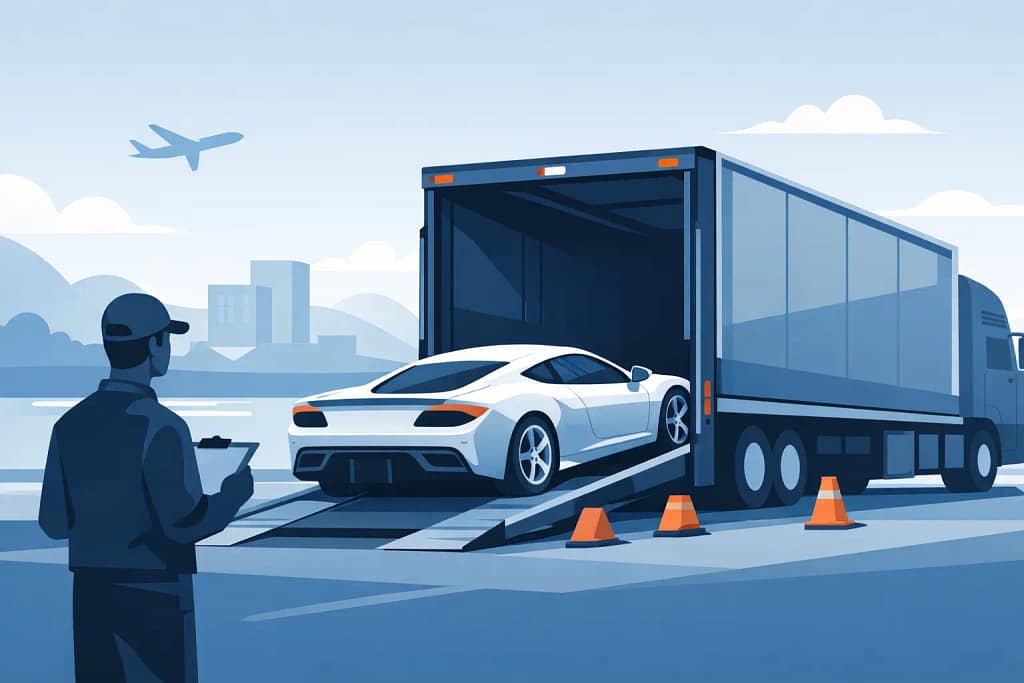
A low clearance car can get hung up on a steep driveway, scrape on a speed bump, or catch its front lip on a trailer ramp in seconds. That is why figuring out how to ship low clearance car models the right way is less about speed and more about setup. The wrong trailer or loading angle can create damage before the trip even starts.
If your car is lowered, modified, exotic, or simply built with very little ground clearance from the factory, transport needs to be planned around that reality. The good news is that shipping it safely is very doable when the carrier knows what to look for and uses the right equipment.
How to ship low clearance car without damage
The most important part of the job is loading. A low clearance car is not difficult to transport because it is fragile by default. It becomes difficult when the trailer angle is too sharp, the ramps are too short, or the driver is not prepared for the car’s approach and breakover angles.
That is why the first step is always disclosure. When you request a quote, share the exact year, make, and model, and mention any lowering springs, coilovers, side skirts, front splitters, air suspension, or aftermarket body pieces. If the car is inoperable, include that too. The more accurate the details, the easier it is to assign the right truck and avoid day-of-pickup problems.
For many low cars, a standard open carrier can still work if the loading angles are manageable and the driver uses ramp extensions or boards. For cars that sit extremely low or have expensive bodywork, enclosed transport is often the safer choice because those trailers are more commonly used for specialty vehicles and may offer gentler loading options. It depends on the vehicle and the route, not just the price point.
The trailer matters more than most people think
People often focus on whether they want open or enclosed shipping, but with a low clearance vehicle, the better question is how the car will get onto the trailer in the first place. That is where experience shows.
A transporter handling low vehicles should be prepared to reduce the loading angle. That can mean using longer ramps, race ramps, wood planks, or hydraulic liftgate equipment depending on the trailer type. Cars with extended front overhangs or very low side skirts need extra attention because they can clear the front ramp but still scrape underneath at the transition point.
This is also why not every carrier is the right fit for every low car. A company that regularly handles specialty vehicles will know that a one-size-fits-all approach does not work. Fully licensed and insured transport is the baseline. Real value comes from matching the vehicle to a carrier that has the equipment and patience to load it correctly.
Open vs. enclosed for a low clearance car
Open transport is the more budget-friendly option and works well for many lowered sedans, coupes, and sporty daily drivers. If the car is moderately low and the carrier has proper ramp extensions, open shipping can be a practical choice.
Enclosed transport makes more sense when the car is especially low, high in value, or fitted with fragile exterior parts. It also adds protection from weather and road debris. That does not automatically mean every low car needs enclosed shipping, but if your front splitter costs more than the price difference between trailer types, the decision gets easier.
Door-to-door is convenient, but access can change the plan
Door-to-door shipping is usually the simplest option, but your exact street may not be ideal for loading a low vehicle. Steep driveways, uneven pavement, tight neighborhoods, and heavy traffic can all increase the chance of scraping during pickup or delivery.
In those cases, a nearby flat parking lot can be the better handoff point. It may feel less convenient at first, but it often makes the process safer. A good transport coordinator will tell you that upfront rather than forcing a difficult pickup location.
How to prepare a low clearance car for transport
Preparation matters because the driver needs a car that can be loaded with as few surprises as possible. Start by removing loose accessories and any items sitting low enough to shift or drag. If your vehicle has a detachable front lip, side skirt extension, or very low aftermarket add-on that can be safely removed, ask whether taking it off before shipping makes sense.
Take clear photos of the car from all sides, including close shots of the front bumper, rocker panels, splitter, and rear valance. On a low car, these are the areas most owners worry about, and good photos help document condition before pickup.
If the car has adjustable suspension, raise it to transport height if possible. That single step can make loading much easier. If it is equipped with an air suspension system, make sure the driver knows how it operates and whether it needs to stay in a certain mode. If the battery is weak and the suspension could drop unexpectedly, address that before transport day.
Fuel should generally be kept around a quarter tank. That leaves enough for loading and unloading without adding unnecessary weight. Also check for fluid leaks. A carrier may refuse a vehicle with active leaking issues, and even if they do not, mechanical problems can complicate loading for a low car.
Pricing depends on more than distance
Customers often expect a simple flat rate based on mileage, but low clearance vehicle transport can cost more because it may require a specialty trailer, additional loading time, or a carrier with niche experience. That does not mean the price should be vague. It means the quote should reflect the real requirements of the shipment.
If a quote seems unusually cheap, ask what equipment is being used and whether the carrier has experience with lowered or exotic vehicles. Hidden costs in auto shipping often show up when details were ignored at booking. Honest pricing usually starts with honest vehicle information.
Timing also affects cost. If you need expedited pickup, have limited pickup access, or are shipping to a remote area, those variables can move the rate. On the other hand, if your schedule is flexible, you may have more room to balance cost and service level.
Questions worth asking before you book
When you are comparing transport options, ask direct questions. Has the carrier moved low clearance cars before? Will they use ramp extensions or specialty loading equipment if needed? Is the vehicle going on an open trailer or enclosed trailer, and why? What happens if the pickup location is too steep or tight for safe loading?
You should also ask about insurance, inspection procedures, and communication during transit. Real people, real support matters more with specialty shipments because small issues need fast answers. A low clearance vehicle does not leave much margin for improvising.
This is where a service-first company stands out. Pro Auto Carriers, for example, focuses on upfront details, vetted and insured carriers, and clear coordination from pickup through delivery. That kind of process helps reduce the common problems that happen when transport is booked on price alone.
Common mistakes that lead to damage or delays
The biggest mistake is not telling the transporter the car is lowered. Some owners assume the driver will figure it out at pickup, but by then the wrong trailer may already be assigned.
Another mistake is focusing only on transit protection and overlooking loading risk. A car can be perfectly safe once strapped down, but still get damaged if the approach angle is wrong during pickup.
It is also common for owners to leave fragile aftermarket parts in place without discussing them in advance. Some modifications are fine as-is. Others need extra planning. It depends on how low the part sits and how exposed it is during ramp transitions.
What a smooth shipment actually looks like
A well-handled low clearance shipment usually feels uneventful, and that is the point. The quote reflects the real vehicle setup. The carrier arrives with a plan. The loading angle is controlled. The driver takes time with ramp placement. The car is secured properly, transported on schedule, and delivered without drama.
That kind of result is not luck. It comes from matching the vehicle to the right transport method, asking the right questions early, and working with a company that treats special handling as part of the job, not an inconvenience.
If your car sits low, do not assume shipping it has to be risky or complicated. A little extra planning goes a long way, and the right transporter will make the process feel controlled from the first call to final delivery.