
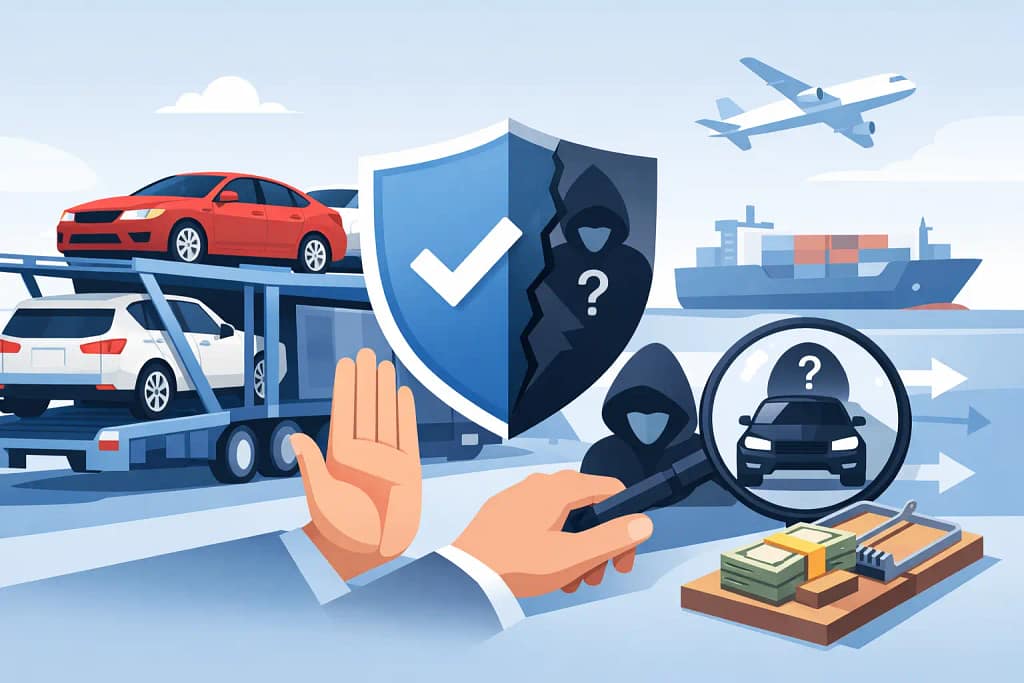
The fastest way to lose money in auto transport is to trust a quote that feels easy before you know who is actually moving your vehicle. If you are wondering how to avoid car shipping scams, start with one rule: do not judge a transporter by price alone. Scammers know that most customers are comparing quotes, often under time pressure, and they use that urgency to win deposits, overpromise pickup dates, or disappear once payment is sent.
Car shipping is a legitimate service, but it is also an industry where vague promises and weak communication can create expensive problems. Some bad actors pose as carriers they are not. Others advertise unrealistically low rates, collect upfront money, then raise the price when your pickup window arrives. A few simply stop responding after taking payment. The good news is that most of these scams follow the same pattern, which makes them easier to spot if you know what to look for.
How to avoid car shipping scams before you book
A trustworthy company should be easy to verify. That means you should be able to confirm its business identity, licensing status, insurance coverage, and customer support without chasing people down. If a company gives you only a first name, a cell phone number, and a quote that expires in an hour, that is not efficiency. That is pressure.
Start by asking whether you are dealing with a broker, a carrier, or a company that works through a vetted carrier network. None of those models is automatically bad, but the answer matters. A direct carrier operates the truck. A broker arranges the shipment with a carrier. The problem comes when a company is unclear about its role, because that often leads to confusion about who is responsible for timing, pricing, and claims.
A legitimate transporter should also explain what is included in the quote. Ask if the rate covers door-to-door service, fuel, insurance, and standard loading and unloading. If your vehicle is oversized, inoperable, lowered, lifted, or especially valuable, ask how that changes the price. Honest companies discuss these variables up front. Scam-oriented operators tend to keep the quote vague so they can add charges later.
The biggest red flags in auto transport
Most car shipping scams are not sophisticated. They rely on customers ignoring small warning signs because they are busy or eager to lock in a low rate.
One of the clearest red flags is a quote that is dramatically lower than every other estimate. Car shipping prices move for real reasons – distance, route demand, season, vehicle size, trailer type, and timing. If one company is far below the rest, there is usually a catch. Sometimes the quote is designed just to secure your deposit. Later, you hear that a truck is unavailable unless you agree to a higher price.
Another warning sign is a large upfront payment requirement, especially if the company pushes payment methods that are hard to dispute. Be careful with wire transfers, payment apps, gift cards, or cash-only demands. Many reputable transport companies do require a scheduling deposit, but the terms should be clear, documented, and reasonable. You should know when the rest is due, who receives it, and under what conditions fees are refundable.
Poor communication is another issue customers underestimate. If you cannot get a straight answer before booking, service usually does not improve after booking. Watch how the company responds when you ask basic questions about pickup windows, insurance, inspection reports, or delivery timing. Clear, consistent communication is one of the simplest ways to tell whether a company is built for real service or just lead generation.
Fake urgency should also put you on alert. If someone tells you the truck is leaving in an hour and you have to pay immediately to hold your spot, pause. Real transport scheduling can move quickly, but legitimate companies can still explain the route, the timing, and your payment terms without rushing you into a blind decision.
Check licensing and insurance the right way
If you want to know how to avoid car shipping scams with the least amount of guesswork, verify the company before you pay anything. A real auto transport business should have a registered DOT or MC number and should be willing to share it. That information helps you confirm whether the company is operating as represented.
Insurance matters just as much as licensing. Ask what kind of cargo insurance applies to your shipment and request proof if needed. Do not settle for a vague statement like “you are fully covered.” Covered for what, exactly? You want to know the carrier’s coverage limits, whether there are exclusions, and how claims are handled if damage occurs.
This is especially important for classic, luxury, exotic, or specialty vehicles. A standard shipment and a high-value enclosed shipment are not the same risk profile. The right company will understand that and explain how protection, trailer type, and handling procedures match your vehicle.
Read reviews with a little skepticism
Reviews are useful, but only if you read them carefully. A five-star rating alone does not tell you much. Look for patterns in the comments. Do customers mention hidden fees, missed pickup windows, or phones suddenly going silent after a deposit? Those details matter more than generic praise.
It also helps to notice whether the company responds professionally to complaints. No transporter can control weather, traffic, mechanical issues, or every route delay. What matters is how problems are handled. A company that communicates clearly, updates the customer, and works toward a solution is very different from one that disappears when the plan changes.
Be cautious if all the reviews sound nearly identical or unusually polished. That can be a sign that the feedback is manufactured. Real customer reviews usually include specific details about pickup, delivery, vehicle type, route, or service quality.
Questions every customer should ask
Before booking, ask who is responsible for your vehicle from dispatch to delivery. Ask when the vehicle inspection happens and whether you will receive a bill of lading documenting the car’s condition. Ask about pickup windows instead of demanding an unrealistic exact hour, because transport operates on routes, not parcel-style appointment slots.
You should also ask what happens if the truck cannot access your street. In many neighborhoods, low bridges, HOA restrictions, narrow roads, or city parking rules make direct home pickup impossible. A reliable company will explain that nearby meeting points are sometimes necessary and will treat that as normal planning, not a surprise fee opportunity.
Cancellation terms deserve close attention too. If your plans change, can you cancel without losing your entire payment? What happens if the transporter misses the pickup window? Clear policies protect both sides. Vague policies usually protect only the company.
Why the cheapest quote often costs more
Low-ball pricing is one of the oldest tactics in car shipping. It works because customers naturally compare numbers first. But if the price is too low to attract a real carrier, your order may sit unassigned while you wait. Then, as your deadline gets closer, you are asked to accept a higher rate.
That does not mean the highest quote is automatically the safest option. It means a realistic quote is usually the better signal. Fair pricing reflects current market conditions, route demand, and the details of your shipment. Transparent companies explain that. They do not just promise the impossible.
This is where experienced support makes a real difference. A company that gives you direct answers, realistic timing, and upfront pricing is usually doing more than selling a slot. It is managing the transport process so there are zero surprises when pickup day arrives.
How to avoid car shipping scams on pickup and delivery day
Protection does not stop once you book. At pickup, your vehicle should be inspected and its condition documented before it is loaded. Take your own photos from multiple angles, including close-ups of any existing damage. Remove personal items unless the company clearly allows a limited amount and explains the rules.
On delivery, inspect the vehicle again before signing off. If there is any new damage, note it on the inspection paperwork immediately. Do not rely on a verbal promise that someone will “take care of it later.” Documentation matters.
You should also expect reasonable updates during transport. No shipment is perfect, and timing can shift due to weather, traffic, or route changes. The issue is not whether anything changes. The issue is whether the company keeps you informed.
The safer way to book car shipping
The safest car shipping experience usually comes from choosing a company that makes the process boring in the best possible way. Clear quote. Clear contact information. Clear insurance. Clear pickup and delivery expectations. Real people who answer the phone and explain what happens next.
That is the standard customers should expect, whether they are shipping a daily driver across state lines or arranging enclosed transport for a collector vehicle. Pro Auto Carriers is built around that kind of straightforward service, because trust in this business comes from execution, not slogans.
If a quote sounds too good, a payment request feels rushed, or the answers stay fuzzy, step back. A legitimate transporter will not mind a careful customer. In auto transport, a few extra minutes of verification can save you days of stress and a very expensive mistake.