
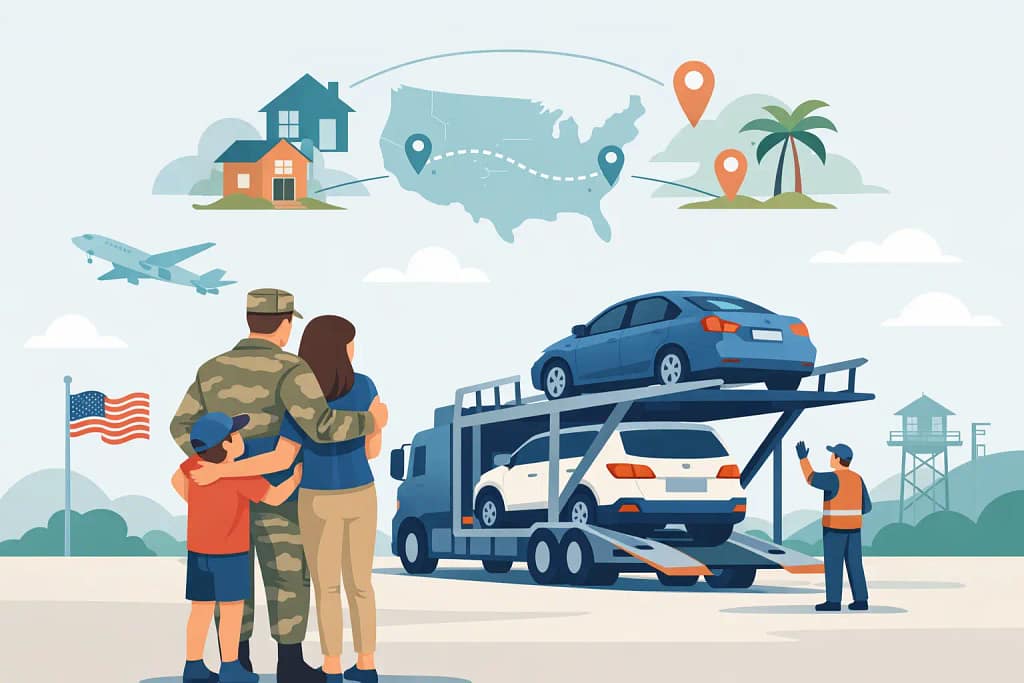
Orders can change fast. One week you’re settling into a routine, and the next you’re planning a PCS, sorting housing, and figuring out how to get a vehicle from one state to another without adding more stress to the move. That is why car shipping for military families needs to be straightforward from the start – clear pricing, realistic timing, and real communication when plans shift.
Military moves already come with enough moving parts. School schedules, housing availability, deployment timing, and base access can all affect pickup and delivery. A transport company that treats your shipment like a standard relocation can create delays and confusion. A company that understands how military timelines work will focus on flexibility, documentation, and keeping you informed the whole way.
Why car shipping for military families works differently
Not every vehicle move is complicated, but military relocations often are. A civilian move might have a fixed closing date and a stable delivery address. Military families often deal with temporary lodging, last-minute reporting dates, or uncertainty around when a household shipment will arrive. That changes how auto transport should be planned.
Timing is one major difference. If your orders give you a narrow window, you may need pickup quickly and delivery within a specific range, not just “sometime next week.” Cost is another factor. Families are often balancing reimbursement timelines, travel expenses, and the need to keep one vehicle while shipping another. The right transport setup depends on your schedule, budget, and how much flexibility you actually have.
There is also the human side of it. If one spouse is already at the new duty station and the other is managing the move, communication matters more than usual. You need updates that are easy to follow and a support team that answers the phone when details change.
Choosing the right transport option
For most military families, open car transport is the practical choice. It is widely available, cost-effective, and works well for standard daily drivers. If you’re shipping a family SUV, sedan, or pickup and your main goal is reliable delivery, open transport usually makes the most sense.
Enclosed transport is a different fit. It costs more, but it offers added protection for high-value vehicles, classics, luxury cars, or specialty vehicles that need more careful handling. Some families use enclosed shipping when one vehicle is a collector car or when they want extra protection during a cross-country move.
Pickup and delivery style matters too. Door-to-door transport is the easiest option when access allows it, especially if you’re managing children, pets, and a tight travel schedule. In some areas, though, large carriers cannot safely enter residential streets, apartment complexes, or base roads. In that case, meeting nearby at a larger parking area may be the most efficient solution. Terminal-to-terminal transport can work in some markets, but many families prefer the convenience and visibility of direct pickup and delivery.
What military families should ask before booking
A low quote is not always a better quote. In auto transport, the details behind the number matter just as much as the number itself. If you are comparing companies, ask whether the quote is upfront or if extra charges can appear later due to route changes, access issues, or scheduling adjustments.
You should also ask whether the carrier is fully licensed and insured, how updates will be handled, and what the expected pickup window looks like. That last point is important. Vehicle shipping rarely works like parcel tracking with an exact appointment weeks in advance. Good companies give you a realistic pickup window, explain why timing can vary, and keep you posted as dispatch and transit progress.
For military families, it is also smart to ask what happens if orders change. Sometimes a move date shifts. Sometimes housing is delayed. Sometimes the person receiving the vehicle is not the person who booked it. These are normal situations, and a dependable transporter should be ready for them.
How pricing usually works
The price of car shipping depends on route, vehicle size, season, transport type, and speed. A compact car on an open carrier over a common route will generally cost less than a large SUV headed to a more remote area. Expedited shipping costs more because it requires a tighter scheduling commitment.
Military families often ask whether shipping is worth it compared with driving. It depends on mileage, lodging, fuel, time off, wear on the vehicle, and how many family logistics you are handling at once. Driving may look cheaper at first, but a long-distance trip can add costs quickly, especially if you are traveling with more than one vehicle or trying to coordinate around reporting dates.
What matters most is price transparency. A solid quote should match the service being offered, not lure you in with a number that changes later. Honest pricing is usually a better value than a bargain quote that creates problems when pickup day arrives.
Preparing your vehicle without overcomplicating it
The prep process should be simple. Wash the vehicle so you can clearly see and document its condition. Take time-stamped photos from multiple angles, including close-ups of any existing damage. Remove personal items unless your transporter specifically allows limited cargo and explains the restrictions.
Make sure the gas tank is around a quarter full, the battery is charged, and the tires are properly inflated. If the vehicle has mechanical issues, let the transporter know in advance. Inoperable vehicles can be shipped, but they require the right equipment and planning. The same goes for lifted trucks, oversized vehicles, or cars with low ground clearance.
If base access could be a factor, mention that early. Some drivers cannot enter military installations, and waiting until pickup day to discuss that can cause avoidable delays. Planning a nearby handoff point is often the simplest fix.
Common timing questions and what to expect
One of the biggest misconceptions about auto transport is that pickup and delivery can always be guaranteed down to the hour. Traffic, weather, route density, DOT driving limits, and equipment availability all affect timing. That does not mean the process should feel vague. It means you should work with a company that gives accurate expectations instead of overpromising.
If your move is on a strict schedule, book as early as you can. More lead time usually means better options and less pressure. If you’re working on short notice, expedited service may help, but availability still depends on route and market conditions.
Transit time also varies by distance and route. A shorter shipment is not always faster if the route is less active. A longer cross-country move on a high-demand lane may move efficiently because more carriers are available. This is where experience matters. The right team can tell you what is actually realistic, not what sounds good during a sales call.
Avoiding the most common problems
Most shipping issues start before the vehicle is ever loaded. Unclear quotes, weak communication, and vague scheduling language are the biggest red flags. If a company cannot explain the process in plain English, that is a problem.
Another common issue is assuming every provider offers the same level of service. Some companies hand off the job with very little follow-through. Others stay involved from booking through delivery and help solve problems if a detail changes. For military families, that hands-on support is not a luxury. It can be the difference between a controlled move and a stressful one.
Look for clear answers, insured carriers, and real people who can tell you where things stand. Pro Auto Carriers focuses on that kind of direct support because shipping a vehicle should reduce stress, not add another unknown to your move.
When specialized service makes sense
Some moves need more than a standard setup. If you are shipping a motorcycle, a collector car, an antique vehicle, or a non-running car, the transport plan should reflect that. Specialized vehicles need the right trailer, secure loading procedures, and a carrier that knows how to handle them properly.
Even with a standard family vehicle, there are times when extra service is worth considering. If your reporting date is fixed and your travel window is tight, expedited shipping may save time and reduce uncertainty. If you are moving during peak PCS season, booking early becomes even more important because demand can affect both cost and scheduling.
The best choice is not always the cheapest option. It is the one that matches your timeline, your vehicle, and the level of certainty you need.
A military move rarely unfolds exactly as planned. That is normal. The goal is not finding a transport process with zero variables. The goal is working with people who keep those variables under control, communicate clearly, and help your vehicle arrive where it needs to be without extra friction when your family already has enough to manage.