
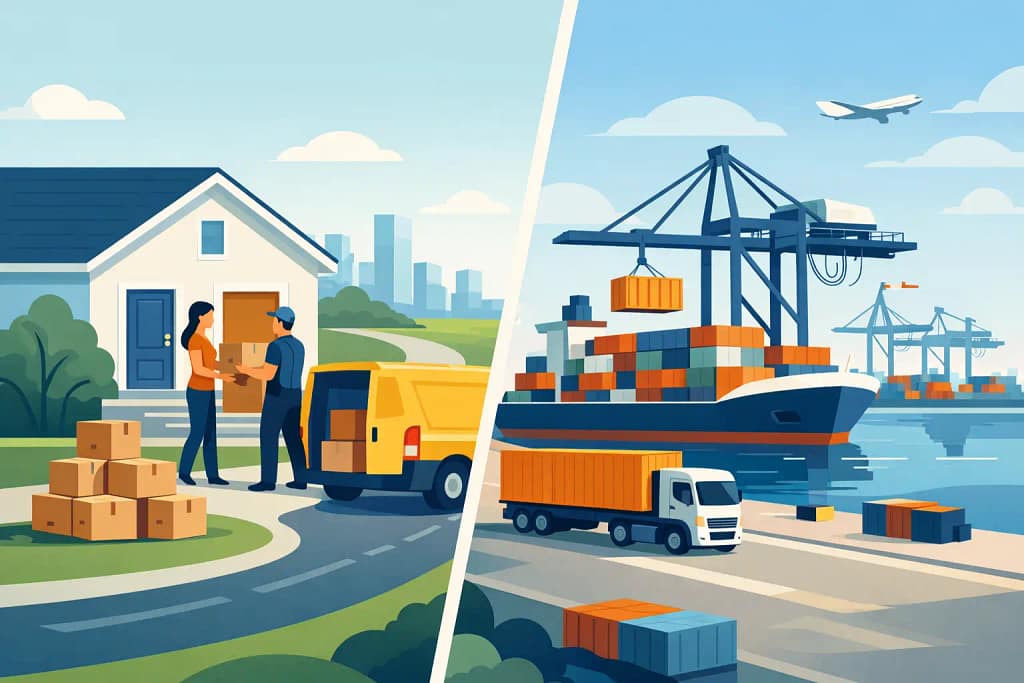
If you are shipping a vehicle, the choice between door delivery vs terminal shipping affects more than price. It changes how much coordination you need, how flexible pickup and drop-off can be, and how easy the entire move feels from start to finish. For some customers, terminal service makes sense. For many others, door delivery is the simpler, lower-stress option.
The right answer depends on your schedule, your budget, your location, and the kind of vehicle you are moving. A daily driver headed to a major metro area has different needs than a classic car, an inoperable vehicle, or a family SUV being shipped during a cross-country relocation. Understanding how both options work helps you avoid delays, extra driving, and unnecessary hassle.
What door delivery means
Door delivery, often called door-to-door auto transport, means the carrier picks up and delivers your vehicle as close to your requested addresses as it can safely and legally reach. That does not always mean a full-size transport truck can pull directly into your driveway. On some streets, low branches, narrow turns, HOA restrictions, or local truck limits make that impossible.
When that happens, the driver arranges a nearby meeting point, such as a wide parking lot or commercial area. You still avoid the need to drop your car at a shipping yard or retrieve it from a terminal days later. In practical terms, door delivery usually means less effort on your side and fewer moving parts.
For most individual customers, this is the most convenient option. It works especially well for relocations, online car purchases, seasonal moves, and families trying to juggle a lot at once.
What terminal shipping means
Terminal shipping means your vehicle is dropped off at a designated storage or transfer location and later picked up from another terminal near the destination. Instead of the truck coming close to your home, you handle both ends of the local trip.
That can sound straightforward, but there are a few details people do not always expect. Terminal hours may be limited. Storage rules vary. Some terminals charge daily fees if a vehicle sits too long before pickup. Depending on the route, your car may also wait at the origin or destination terminal until the next available transport leg is ready.
Terminal shipping can still be a good fit in certain situations, particularly if you are near a major transport hub and have flexibility. But it is usually less convenient than door delivery.
Door delivery vs terminal shipping on cost
Cost is often the first thing people ask about, and it is fair to assume terminal shipping might be cheaper. Sometimes it is. But not always by as much as customers expect.
Terminal service can reduce some routing complexity for the carrier, especially on heavily traveled lanes. That may lower the quote. At the same time, you need to factor in your own time, fuel, rides to and from the terminal, possible storage fees, and the inconvenience of working around terminal schedules. A lower base rate does not always mean lower overall cost.
Door delivery usually costs a bit more because it offers added convenience and more personalized logistics. The carrier is coordinating closer access to your location and the destination, which adds value even if the route adjustment is minor. For many customers, that extra cost is worth it because it removes several points of friction.
If your schedule is tight or your move is already complicated, paying slightly more for door delivery can save more than money. It can save time and reduce stress.
Which option is faster?
Speed depends on route density, pickup window, seasonal demand, and how accessible your locations are. Door delivery is often faster from your point of view because the carrier is working toward pickup and delivery near your actual addresses. There is less need for you to wait on terminal processing or fit your plans around terminal availability.
Terminal shipping can introduce extra waiting time. A vehicle may arrive at the terminal before you can pick it up, or it may sit before the next carrier leg is assigned. On paper, the transit route may look efficient. In real life, handoffs and storage points can add delays.
That said, terminal service may be workable if you are not in a rush and you have a flexible pickup window on both ends. If timing matters, door delivery usually gives you more control and clearer coordination.
Convenience is where the difference really shows
This is the category that matters most for many customers. Door delivery is simpler because it reduces the number of trips and decisions you need to make. You are not arranging transportation to a terminal, checking operating hours, or worrying about what happens if your flight is delayed and your vehicle is ready before you are.
Terminal shipping asks more from you. That may be fine if you live close to a terminal and do not mind the extra legwork. But for first-time shippers, busy families, military relocations, or anyone moving on a tight timeline, terminal service can create avoidable complications.
If you are shipping a high-value car, convenience also overlaps with risk. Fewer handoffs and fewer storage periods generally mean fewer chances for miscommunication or delays.
Door delivery vs terminal shipping for specialty vehicles
Not every vehicle should be handled the same way. If you are shipping a luxury, exotic, classic, antique, modified, or inoperable vehicle, door delivery often makes more sense.
Specialty vehicles benefit from tighter coordination. The fewer extra stops, transfers, and storage periods involved, the better. A classic car sitting at a terminal lot is not ideal if it can be scheduled for direct pickup and delivery with a vetted carrier. The same goes for low-clearance vehicles or cars with custom dimensions that need careful loading.
For inoperable vehicles, terminal shipping can be even more restrictive. Not every facility is set up to receive or release non-running vehicles, and not every transport plan will account for the equipment needed. Direct service tends to be easier to manage when special handling is required.
When terminal shipping still makes sense
Terminal shipping is not the wrong choice. It is just a narrower fit than many people assume.
It can work well if you live near a major metro area with active terminal locations, you have a flexible schedule, and you are trying to trim costs where possible. It may also help if direct truck access to your neighborhood is unusually difficult and meeting nearby is not practical.
Some experienced shippers also choose terminal service because they are comfortable managing the extra steps. If you know the process, have reliable transportation to and from the terminal, and do not mind the added coordination, it can be a reasonable option.
The key is going in with clear expectations. Terminal shipping is less hands-on for the carrier, but more hands-on for you.
How to choose the right option for your shipment
Start with three questions. How much flexibility do you have, how much coordination do you want to handle yourself, and what matters more right now – the lowest possible price or the easiest overall experience?
If your answer is convenience, predictable communication, and less running around, door delivery is usually the better choice. If your answer is budget first, flexible timing, and you are comfortable handling drop-off and pickup at a facility, terminal shipping may be worth considering.
It also helps to be honest about the vehicle itself. A family sedan gives you more options. A collector car or non-running vehicle calls for a more controlled plan. The shipping method should match the real needs of the vehicle, not just the quote.
A reliable transport partner should walk you through those trade-offs clearly. That means honest pricing, clear pickup expectations, and direct communication about what is realistic for your route. At Pro Auto Carriers, that is exactly how we approach it – real people, real support, and zero surprises.
The better choice for most customers
For most individual vehicle owners, door delivery wins because it makes the process easier without adding unnecessary complexity. You get pickup and delivery closer to where you actually need the car, fewer scheduling headaches, and a smoother experience overall.
Terminal shipping still has a place, especially for cost-conscious customers with flexible timelines. But if you want car shipping to feel controlled, clear, and easy to manage, door delivery is usually the option that delivers the better experience.
The best shipping choice is the one that fits your real life, not just the lowest number on a quote.